- HoH Presents
- Posts
- Toolbox Tuesday: Let Your Writing SPARKLE
Toolbox Tuesday: Let Your Writing SPARKLE
How to Craft Vivid Descriptions Without Weighing Down Your Prose

John Harrison
June 03, 2025

Welcome to the very first issue of Toolbox Tuesday, a weekly creative rendezvous between us—writer to writer, mind to mind. Think of it as a secret guild where storytelling sorcerers come to sharpen their spells. Every Tuesday, we unlock a fresh tool, a sharpened edge in the writer's kit, something that will let your prose breathe, shimmer, and strike true.
Today, we face an old nemesis: the overstuffed description.
You know the one. It begins with enthusiasm. You see your character in their world and want your reader to see it too—every glint of sun on cobblestone, every mote of dust in the library air, the weight of silence in the space between words. But somewhere between intention and execution, the rhythm slows. Your story swells, bloats, begins to sag. The sentence that started as poetry now feels like a thicket.
So how do you write lush, vivid, cinematic scenes without drowning your reader in sensory soup? How do you invoke, rather than impose?
That’s where our first featured tool comes in: the SPARKLE Method.
Let’s get into it →
The Spark Behind SPARKLE
This mnemonic isn't just a clever trick—it's a philosophy. Writing that shines does so not because of the quantity of words, but because of the precision, the purpose, and the poetic punch each one carries. SPARKLE is an acronym that offers six essential techniques (and a hidden seventh) to help you write immersive descriptions that glide, not grind.
Let’s unpack it—not like a textbook lecture, but as a walk through the world we build.
S — See Through Their Eyes (Filter Through POV)
Description is not about what you, the writer, see. It’s about what they, your character, see, feel, fear, and fail to notice.
Imagine a street: lantern-lit, rain-slicked, cobbled. A simple, moody backdrop.
A grieving mother walks it like a ghost, barely noticing the light. The rain is a murmur against her skin, her thoughts elsewhere.
A pickpocket? She clocks the alley shadows. The distracted noble. The policeman two blocks away. The glint of a buckle. The rhythm of boots.
Same street. Different world.
What your character notices reveals who they are. And what they don’t notice? That reveals even more.
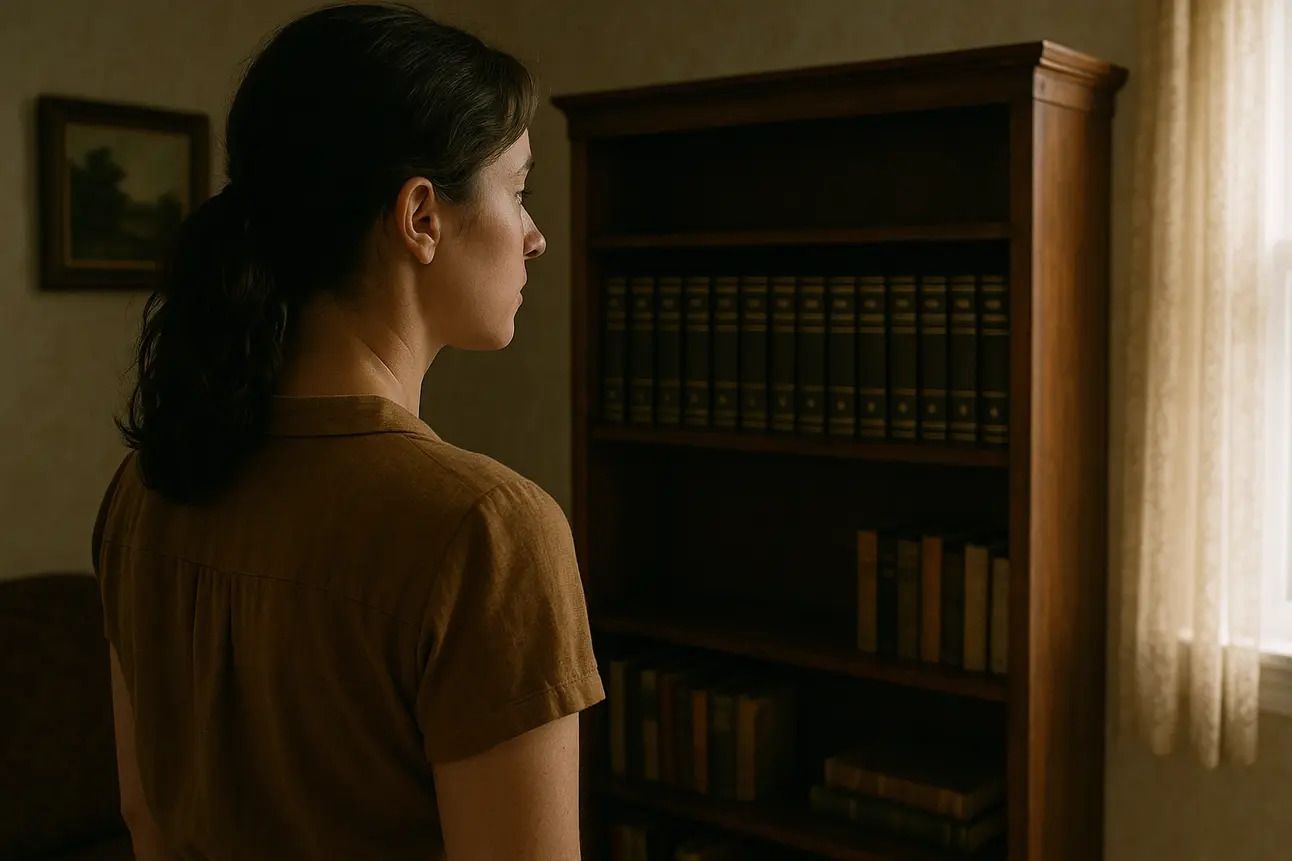
Don’t describe a room. Let the POV react to it.
Now we know what matters to her. Not the wallpaper. Not the furniture. The missing volume.
For those that are trying to figure out AI image generation, if you use the above example, you get the following image.
P — Pick Key Senses (Prioritize Sensory Detail)
Readers don’t want to be overwhelmed—they want to be transported. And transportation isn’t about listing every sensation. It’s about choosing the right one.
Don’t force all five senses into every paragraph. Think of them like spices: potent in the right balance.
Here’s a flat example:
The market smelled of spices, sounded noisy, looked colorful, felt hot, and tasted of dust.
Compare it to this:
Cinnamon and cardamom curled in the air, warm and gold. Sweat stung her brow, and behind her, someone shouted in a language that snapped like flags in the wind.
We didn’t list the five senses—we painted a moment. Two or three well-chosen details will always beat a bloated sensory dump.
Think cinematic. What does the "camera" linger on? What sound interrupts? What smell is inseparable from memory?
Let the senses serve the moment.
A — Atmosphere Mirrors Emotion (Reflect Inner State)
This is one of my favorites—and one I see underused.
The setting isn’t neutral. It’s never neutral. It either works for you, or it works against you.
When your character walks into a storm, do they flinch? Or smile? Is the wind slicing or cleansing? Does the silence comfort them—or press against the ears like cotton?
The wind bent the trees low, not in violence, but in reverence.
The fireplace flickered in the empty inn, not warm, but watchful.
Emotion refracts through environment. A good setting doesn’t just house your character. It reveals them. It becomes metaphor. It becomes mirror.
Let your world carry the emotional load so your prose doesn’t have to explain it outright.
R — Reduce Redundancy (Be Specific, Not Wordy)
Let’s talk bloat.
Adjectives and adverbs are seasoning, not sustenance. Stack too many, and you dilute your image. We’re not here to stuff the page. We’re here to sculpt it.
Take this:
The old, dilapidated, creepy mansion at the top of the hill looked spooky in the dark night.
...or this:
The mansion crouched atop the hill, windows black as bruises.
Specific nouns. Strong verbs. Unexpected metaphor. That is how you make language do more with less.
Whenever you revise, ask: Can I replace these three words with one better one? Can I cut the expected and keep the striking?
Your prose should be a punch, not a puddle.
K — Keep It Working (Multitask Your Description)
Your description should work overtime.
If a paragraph of description doesn’t build world and reveal character and push tone—it’s dead weight.
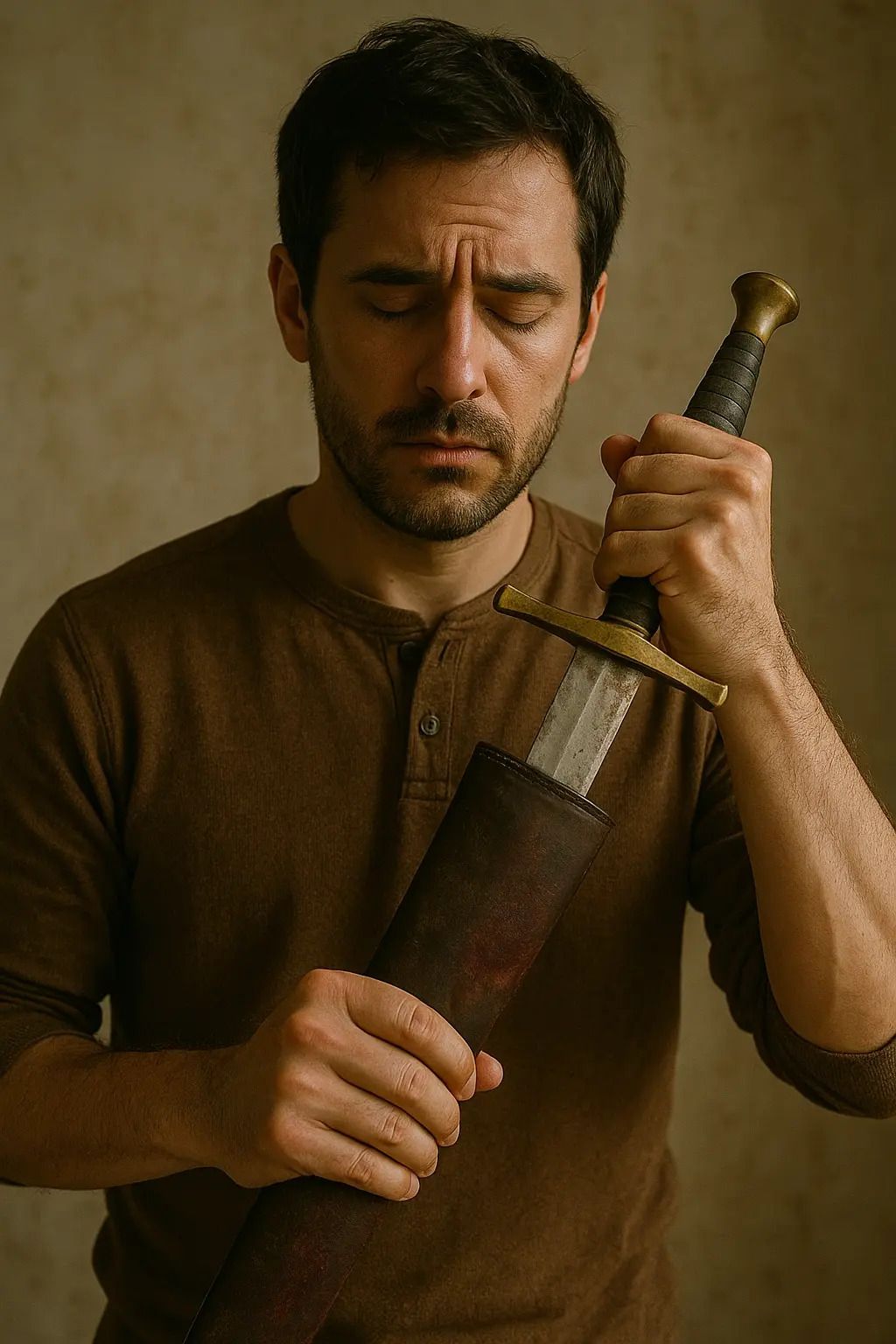
Let’s say you’re describing a sword:
It was a long, silver blade with a hilt wrapped in leather.
Functional. But forgettable.
He drew the sword with a sigh. The leather was still stained where his father’s blood had dried, years ago, refusing to wash clean.
Now the sword is history. Trauma. Legacy. All in one breath.
Description is not scenery. It’s story.
Below is another example of using the above prompt for AI image generation.
L — Let Readers Fill the Gaps (Trust the Reader)
This is where restraint becomes a superpower.
Too much detail kills curiosity. Don’t show us every thread in the tapestry. Show us the tear in the corner and let us imagine the rest.
She wore a dress not meant for mourning, but the hem was still damp from last night’s rain.
You don’t need to tell us the color. The fabric. The neckline. The reader sees it, because they feel it.
If you give them just enough, they’ll meet you in the middle.
Great writing is a collaboration between storyteller and imagination. Leave them room to join you.
E — Edit for Impact (The Silent Seventh Step)
Write freely. But revise ruthlessly.
When you finish your first draft, don’t just ask: Did I describe it? Ask:
Did I evoke it?
Did I reveal something?
Did the words move?
Can anything be cut and leave the passage stronger?
The difference between good description and great description is almost always in the editing. Don’t fear the blade.
Let me pull from one of my own works —"Shadow Dance," as an example:
There’s a scene where Namir walks through Ellsted at dawn, his thoughts heavy with the weight of his lineage and the uncertainty of his future. I didn’t want to simply say, "He walked through town, thinking." That’s not a scene. That’s a summary.
Instead, I leaned into the SPARKLE method before I had a name for it:
The morning's light played across the brownstone structures lazily. The stray dogs padded from alley to alley, following scents only they could trace. Somewhere, a door slammed. Namir flinched. Not from fear, but from memory.
See the shift? The town isn’t a backdrop—it’s a reflection of his inner state. The moment breathes. And every detail has a pulse.
Why This Matters
Because words aren’t just pixels on a page. They are your reader’s entry point into a world only you can build. But that world has to feel real, breathe real, ache real.
When done right, description is not an interruption. It is immersion.
So take this with you: Let your scenes SPARKLE, not smother.
Paint with light. Cut with shadow. Give your reader just enough to dream.
And when you do, they'll stay. They'll walk deeper into the woods with you. They'll listen longer. They'll remember.
Your Turn
This week, pick a scene you've already written. Use SPARKLE as a lens. Where can you trim? Where can you amplify? What does your character notice that you might have missed?
Then tell me about it. Drop your favorite lines in the comments. Let’s build this toolbox together.
See you next Tuesday.
xoxo,

Reply